
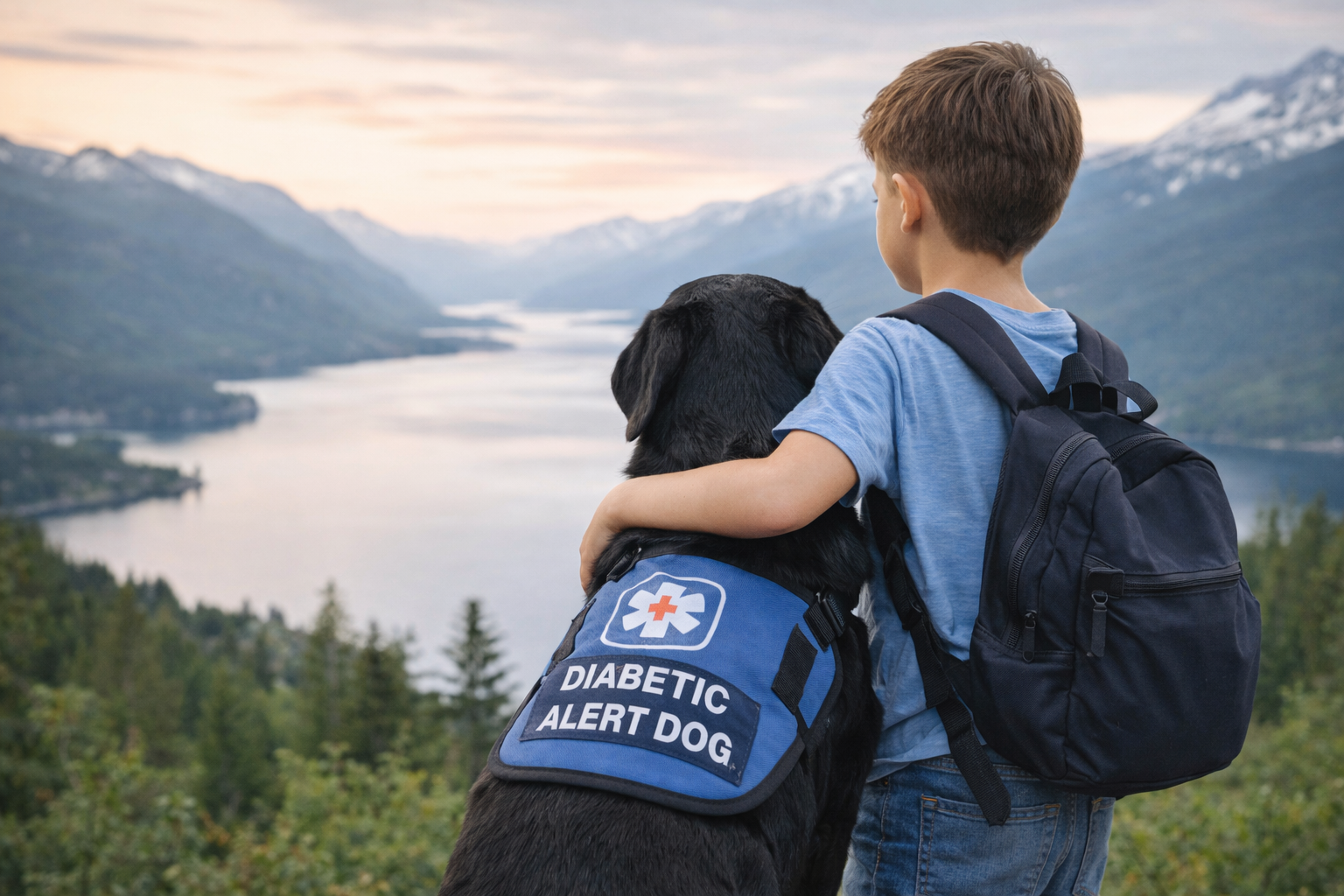
Growing Together: How Diabetic Alert Dogs Support Independence Over Time
For families living with Type 1 diabetes, the journey is not static—it changes as children grow, routines evolve, and independence increases. A diabetic alert dog is not only trained to respond to medical needs in the moment, but to adapt alongside their handler as life unfolds.
At the Ron and Vicki Santo Diabetic Alert Dog Foundation, we often see how these partnerships deepen over time, supporting children and families through each stage of life with greater confidence and freedom.
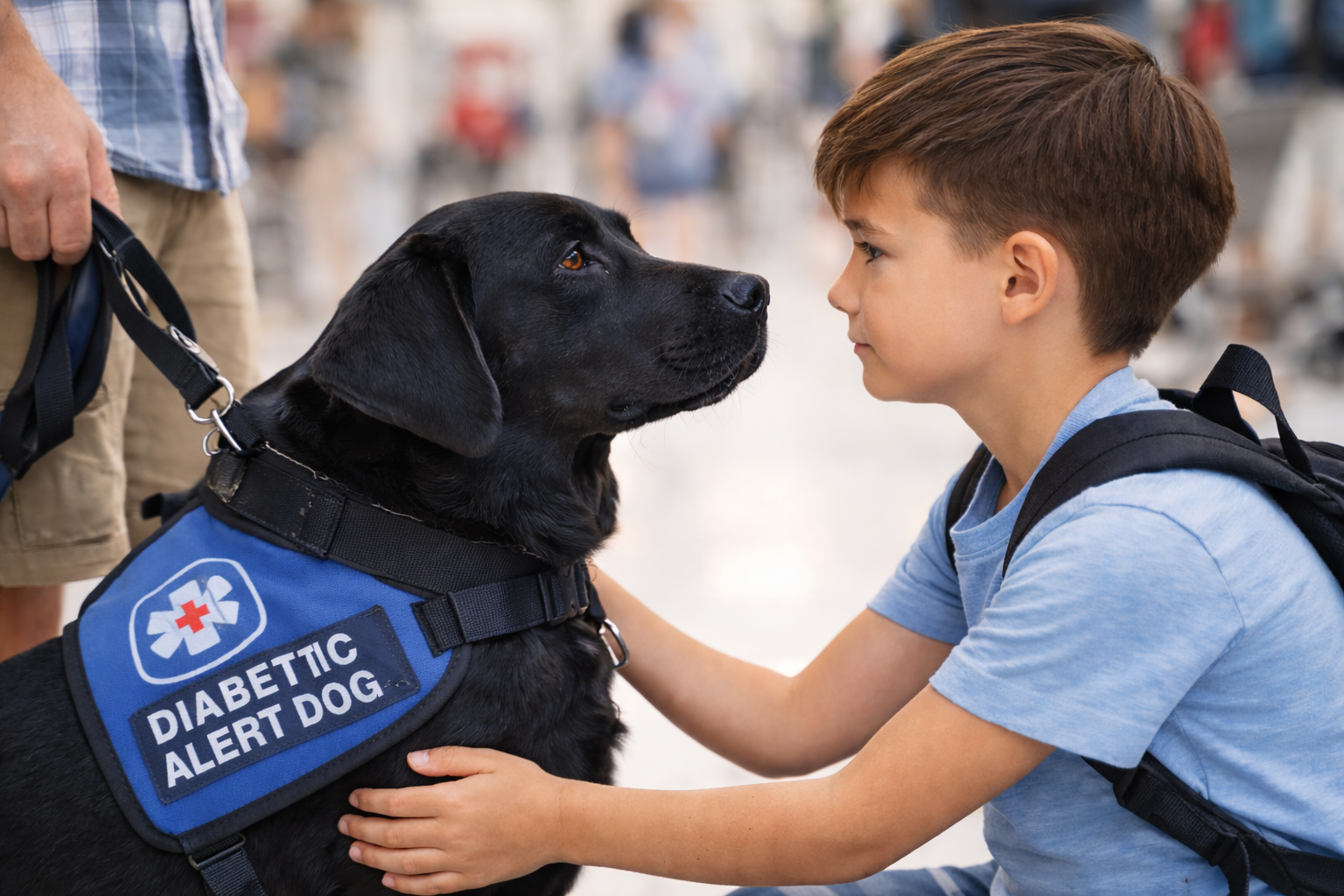
The Handler’s Role: Responsibility, Consistency, and Advocacy
The Handler’s Role: Responsibility, Consistency, and Advocacy
When families think about a diabetic alert dog, much of the focus is understandably placed on the dog’s training and abilities. While the dog’s skills are critical, the success of a diabetic alert dog team depends just as much on the handler. A service dog is not an independent solution, it is a working partner whose reliability is shaped daily by the person on the other end of the leash.
At the Ron and Vicki Santo Diabetic Alert Dog Foundation, we emphasize education and preparation because strong handler involvement is essential for long-term success.
Preparing for Life With a Diabetic Alert Dog
Welcoming a diabetic alert dog into your family is an exciting and meaningful step, but it is also a transition that requires preparation, education, and realistic expectations. These dogs are highly trained working partners, and a successful match depends on the readiness of the entire household.

Life With a Diabetic Alert Dog: What Families and Handlers Should Know
Living with Type 1 diabetes requires constant awareness, preparation, and vigilance—especially for children. Diabetic alert dogs provide an added layer of safety by detecting blood sugar changes before they become dangerous. While these service dogs can be life-changing, it is important for families to understand what daily life looks like when partnering with a diabetic alert dog.
This article explores how diabetic alert dogs support families, what life is like for handlers, and important considerations for everyday activities such as visiting friends, going out in public, and traveling.

Understanding the Canine Lexicon - The Amazing Chaser
Understanding the Canine Lexicon
Have you ever marveled at the way your dog seems to understand exactly what you're saying? Or how even if you spell out the word ‘w.a.l.k’, they know exactly what’s up? It turns out the language comprehension of our canine companions goes well beyond basic training cues.
Dogs don't comprehend language in the same way as humans. They may not grasp the nuances of syntax or grammar, but they have an impressive ability to understand words based on associations, intonations, and context. The key to a dog's word comprehension lies in the way we communicate with them. Dogs pick up on visual and auditory cues, associating specific sounds with actions or objects. This is why your dog might get excited when you mention the word "walk" or start tilting their head when you say "treat." The question then arises: How many words can dogs truly understand?

Oh My, Ticks! – Natural Alternatives For Prevention
Ticks on dogs are a common concern among pet owners, especially during the warmer months. These parasitic arachnids can easily latch onto a dog's skin as they move through tall grass or wooded areas. It is important to regularly check your dog for ticks, paying close attention to areas such as the ears, neck, and between the toes where ticks are known to hide.
Lyme disease is a tick-transmitted disease that has been found in nearly all states in the U.S. Dogs are 50 to 100 times more likely than humans to encounter disease-carrying ticks. Common symptoms include lameness (especially recurrent), fever, lethargy, and swollen lymph nodes. Ticks must be attached to your dog for 48 hours for him to contract Lyme disease, so daily checks and quick removal dramatically ups your chances of keeping your pooch healthy.

A Heartwarming New Year’s Day Tale
As the clock strikes midnight, signaling the arrival of a new year, many people all around the world embrace fresh beginnings and set resolutions for the year ahead. Among them is Elise, a young woman who faces the daily challenges of managing her diabetes. However, this New Year's Day, Elise has a special companion to join her on her journey—a diabetic alert dog.

Service Dogs: Bringing Joy on Christmas Day
Christmas Day is a time when families gather to share love, laughter, and create lasting memories. It is a holiday that evokes feelings of warmth, kindness, and compassion. Amidst the festivities, one group of unsung heroes plays a significant role in spreading joy and making a difference in the lives of many - service dogs.

Going into a Restaurant with Your Service Dogo
We at the Ron and Vicki Santo Diabetic Alert Dog Foundation, understand the importance of raising awareness about the rights and needs of individuals with disabilities who rely on service dogs for assistance. Today, we would like to shed light on the experience of going into a restaurant with a service dog and the importance of accessibility for all.

Are you Considering getting a Diabetic Alert Dog?
Are you considering getting a diabetic alert dog to help you manage your diabetes? These specially trained canines have proven to be invaluable companions for individuals living with diabetes. To ensure a successful partnership with your alert dog, here are some important tips to keep in mind:

Fourth of July Events: To take my service dog or not?
While a good service dog should have the ability to handle nearly anything it is presented with, many Fourth of July events are too overwhelming for even the best-trained dogs, let alone one who may not have been prepared for the loud stimuli. Keep your dog’s level of training and time with you in mind.